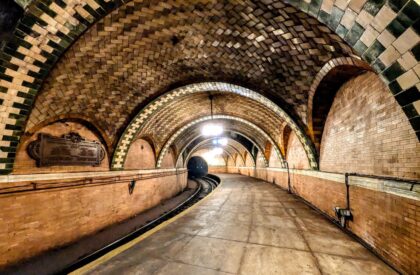
The Old City Hall station, an iconic piece of New York City’s transit history, was completed in 1904 as part of the original subway line. This station, renowned for its architectural beauty and historical significance, was decommissioned in 1945 due to its limited capacity and the need for more modern facilities.
Today, the station remains largely intact beneath the streets of Tribeca, serving as a fascinating glimpse into early 20th-century subway design. Its elegant architecture features high vaulted ceilings, intricate tile work, and vintage lighting fixtures that evoke a bygone era of urban transit.
Access to the Old City Hall station is restricted to special tours organized by the New York Transit Museum. Visitors must obtain tickets in advance, as the tours are limited and highly sought after. These visits provide a rare opportunity to explore the station’s preserved platforms and tunnels, which are otherwise closed to the public.
During the tour, guests can marvel at the station’s original features, including its ornate tile mosaics and historic signage. The experience offers a unique perspective on the evolution of New York City’s subway system and its impact on urban development.
Historically, the station was designed to serve the original IRT line, connecting City Hall to other parts of Manhattan. Its architectural style reflects the grandeur of early subway stations, with an emphasis on aesthetic appeal and passenger comfort. Despite its closure, the station remains a treasured relic, symbolizing the city’s rich transit heritage.
In recent years, efforts have been made to preserve and promote the station as a historical site. The tours not only educate visitors about the station’s history but also highlight the importance of maintaining New York’s architectural and engineering legacy.
For those interested in urban history and transit architecture, visiting the Old City Hall station offers a rare and insightful experience. It stands as a testament to the city’s innovative spirit and its ongoing commitment to preserving its historical landmarks.